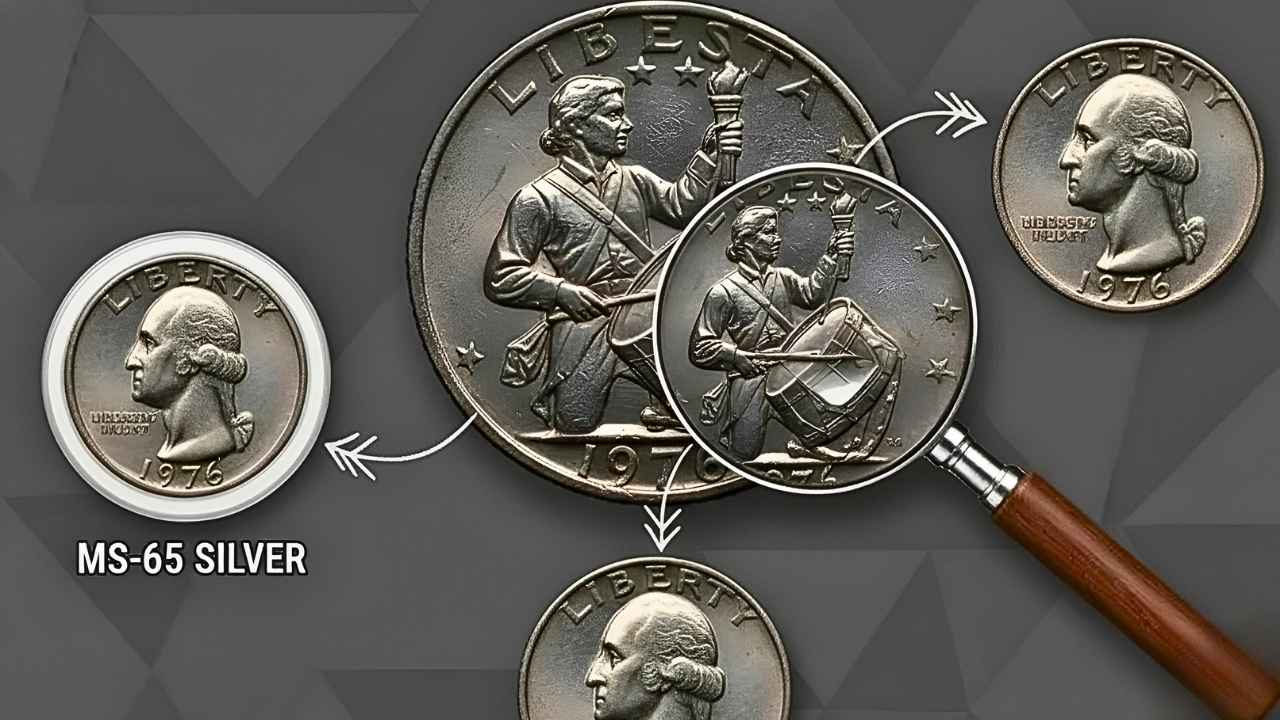
1976 Bicentennial Quarters Worth Big Money: In 1976, the United States celebrated its 200th anniversary of independence. To mark this historic occasion, the U.S. Mint released a special commemorative quarter with a unique design. Unlike the standard Washington Quarter, the Bicentennial edition featured the dual date 1776 1976 on the obverse and a colonial drummer on the reverse, designed by Jack L. Ahr. This patriotic coin was minted in both 1975 and 1976, but all carry the same dual date. Millions were produced, yet certain rare varieties and minting errors have made some of these coins worth far more than their face value.
Why Bicentennial Quarters Are Collectible
The Bicentennial Quarter is more than just a piece of currency. It represents a milestone in American history and a symbol of national pride. Collectors value these coins for their historical significance, unique design, and potential rarity. While most examples are common and worth only twenty-five cents, some versions can fetch hundreds or even thousands of dollars depending on condition, composition, and minting errors.
Silver Bicentennial Quarters
One of the most desirable varieties is the silver Bicentennial Quarter. These coins were struck in 40 percent silver and sold in special collector sets. They are distinguishable by their weight and edge coloration compared to standard copper-nickel quarters. A silver Bicentennial Quarter in Mint State condition can sell for several dollars, and proof versions often command higher prices. Collectors especially prize coins preserved in their original mint packaging.
Rare Errors That Increase Value
Minting errors are among the most exciting aspects of coin collecting, and Bicentennial Quarters are no exception. Some of the most notable errors include:
- Double die obverse or reverse, where parts of the design appear doubled.
- Off-center strikes, which create a dramatic visual effect.
- Coins struck on the wrong planchet, such as a dime or foreign coin blank.
- Clipped planchets, where part of the coin is missing due to a cutting error.
These mistakes are rare and often unique, making them highly desirable to collectors. Depending on the severity of the error and the condition of the coin, values can range from hundreds to thousands of dollars.
Proof Bicentennial Quarters
Proof coins are specially struck for collectors using polished dies and planchets, resulting in sharp details and mirror-like surfaces. Bicentennial Proof Quarters were produced in both copper-nickel and silver. These coins are more valuable than regular circulation strikes, especially when preserved in their original packaging or graded by professional services. Proof coins often serve as the centerpiece of Bicentennial collections.
The Importance of Condition and Grading
Condition plays a crucial role in determining the value of any coin. Bicentennial Quarters are graded on a scale from Poor (P-1) to Mint State (MS-70). Coins in Mint State or Proof condition are worth far more than those that have circulated. Professional grading services provide authentication and assign grades, which helps collectors and investors feel confident in their purchases. A Bicentennial Quarter graded MS-67 or higher can command significant premiums in the marketplace.
Collector Demand and Market Trends
The Bicentennial Quarter remains popular among collectors due to its historical significance and unique design. While most examples are common, rare varieties and error coins continue to attract strong demand. Market trends show that high-grade coins and unusual errors consistently sell for premium prices. As interest in coin collecting grows, the value of rare Bicentennial Quarters is likely to appreciate further.
Stories of Surprising Discoveries
There are countless stories of people discovering valuable Bicentennial Quarters in pocket change or inherited collections. A coin that looks ordinary to the untrained eye can sometimes be worth a small fortune. These discoveries add excitement to coin collecting and remind us that treasures can still be found in everyday life. The thrill of uncovering a rare error or silver issue keeps collectors searching through rolls of coins and family collections.
How to Identify Valuable Bicentennial Quarters
Collectors can identify valuable Bicentennial Quarters by paying attention to several details. Look for coins with the dual date 1776 1976 and check for mint marks such as D for Denver or S for San Francisco. Examine the coin for signs of minting errors, such as doubling or off-center strikes. Silver versions can be identified by their distinct edge and weight. Using a magnifying glass and coin reference guides can help spot these details.
The Future of Bicentennial Quarters
The Bicentennial Quarter continues to hold a special place in American numismatics. While most examples are common, rare varieties and errors ensure that these coins remain valuable to collectors. As time passes, high-grade coins and unique errors will likely become even more sought after. Collectors who pay attention to details and preserve their coins carefully may find themselves holding pieces that appreciate significantly in value.
Conclusion
The 1976 Bicentennial Quarter is more than just a coin. It is a celebration of American independence, a piece of history, and in rare cases, a source of significant wealth. From silver issues to dramatic minting errors, these quarters have captivated collectors for decades. Whether you are a seasoned numismatist or a curious beginner, the hunt for valuable Bicentennial Quarters offers both excitement and financial reward.