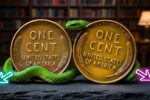
Lincoln Wheat Penny $5 Million Claim: The Lincoln Wheat Penny was first introduced in 1909 to honor the 100th anniversary of Abraham Lincoln’s birth. Designed by Victor David Brenner, the coin featured Lincoln’s portrait on the obverse and two wheat stalks on the reverse, symbolizing prosperity and growth. It was the first regular-issue coin in the United States to feature a real person rather than a symbolic figure. Produced until 1958, the Wheat Penny remains one of the most beloved coins among collectors.
Why Wheat Pennies Fascinate Collectors
The Wheat Penny is more than just a coin. It represents a piece of American history, a tribute to one of the nation’s greatest presidents, and a symbol of early twentieth-century design. Collectors are drawn to Wheat Pennies because of their historical significance, affordability, and the thrill of discovering rare varieties. While most Wheat Pennies are worth only a few cents above face value, certain rare issues and minting errors have made some of them highly valuable.
The $5 Million Claim Explained
In recent years, stories have circulated about a Lincoln Wheat Penny valued at $5 million. These claims often appear in headlines or online discussions, sparking excitement among collectors and casual readers alike. However, the reality is more complex. While some Wheat Pennies have sold for extraordinary sums, the idea of a single coin consistently valued at $5 million is more myth than fact. Such claims are often based on rare error coins or unique specimens that achieved high auction prices under specific circumstances.
Key Dates and Rare Varieties
Several Lincoln Wheat Pennies stand out as especially valuable. These coins are prized for their rarity, minting errors, or special compositions.
- 1909-S VDB Penny: Produced in San Francisco with designer Victor David Brenner’s initials, this coin is one of the most famous rarities.
- 1914-D Penny: With a low mintage from the Denver Mint, this coin is highly sought after.
- 1922 No D Penny: A variety where the Denver mint mark is missing, making it rare and valuable.
- 1931-S Penny: Another low-mintage coin that collectors prize.
- 1943 Copper Penny: Mistakenly struck in copper instead of steel during World War II, this coin is among the most valuable Wheat Pennies.
- 1955 Doubled Die Penny: A dramatic error coin where the date and lettering appear doubled, making it a collector favorite.
Each of these coins has sold for thousands of dollars, and in rare cases, values have reached astronomical figures.
The Role of Minting Errors
Minting errors are among the most fascinating aspects of coin collecting. These mistakes occur during production and result in coins that differ from the intended design. Examples include doubled dies, missing mint marks, off-center strikes, and coins struck on incorrect planchets. Because they are rare and often visually striking, error coins attract strong interest from collectors and can command high prices.
Separating Fact from Myth
The claim of a $5 million Wheat Penny is often exaggerated. While certain coins like the 1943 Copper Penny or the 1955 Doubled Die have sold for impressive sums, they rarely approach the multimillion-dollar mark. Auction results show that even the rarest Wheat Pennies typically sell for hundreds of thousands rather than millions. The myth persists because extraordinary stories capture attention, but collectors should approach such claims with caution and rely on verified auction records.
The Importance of Condition and Grading
Condition plays a crucial role in determining the value of a Lincoln Wheat Penny. Coins are graded on a scale from Poor (P-1) to Mint State (MS-70). A coin in Mint State condition can be worth exponentially more than the same coin in circulated condition. Professional grading services provide authentication and assign grades, which helps collectors and investors feel confident in their purchases. A Wheat Penny graded MS-67 or higher can command significant premiums in the marketplace.
Collecting Wheat Pennies as an Investment
Coin collecting is more than just a hobby. Rare Wheat Pennies have consistently appreciated in value over time, making them attractive investment opportunities. For example, a 1943 Copper Penny in pristine condition can sell for hundreds of thousands of dollars. Investors often diversify their portfolios by including rare coins, which can serve as a hedge against inflation and economic uncertainty.
Stories of Hidden Treasures
There are countless stories of people discovering valuable Wheat Pennies in pocket change or inherited collections. A coin that looks ordinary to the untrained eye can sometimes be worth a small fortune. These discoveries add excitement to coin collecting and remind us that treasures can still be found in everyday life. The thrill of uncovering a rare error or key date keeps collectors searching through rolls of coins and family collections.
How to Identify Valuable Wheat Pennies
Collectors can identify valuable Wheat Pennies by paying attention to several details. Mint marks such as D for Denver or S for San Francisco are important indicators. Key dates with low mintage numbers should be noted. Signs of minting errors, such as doubling or unusual features, can add significant value. Coins in exceptional condition with minimal wear are always worth closer inspection. Using a magnifying glass and coin reference guides can help spot these details.
The Future of Wheat Pennies
The Lincoln Wheat Penny continues to hold a special place in American numismatics. While most examples are common, rare varieties and errors ensure that these coins remain valuable to collectors. As time passes, high-grade coins and unique errors will likely become even more sought after. Collectors who pay attention to details and preserve their coins carefully may find themselves holding pieces that appreciate significantly in value.
Conclusion
The Lincoln Wheat Penny is more than just a coin. It is a piece of history, a tribute to Abraham Lincoln, and in rare cases, a source of extraordinary wealth. From the 1909-S VDB to the 1943 Copper Penny, these coins have captivated collectors for decades. The claim of a $5 million Wheat Penny is more myth than reality, but it highlights the fascination and excitement that coin collecting inspires. Whether you are a seasoned numismatist or a curious beginner, the hunt for valuable Wheat Pennies offers both education and financial reward.